How to measure
Made-to-measure curtains are produced from your figures: measure calmly, better twice. All you need is a tape measure and two minutes.
- A rigid tape measure
- Two minutes
- Pen and paper
The four steps
Follow these four diagrams to take the right measurements, depending on the mounting.
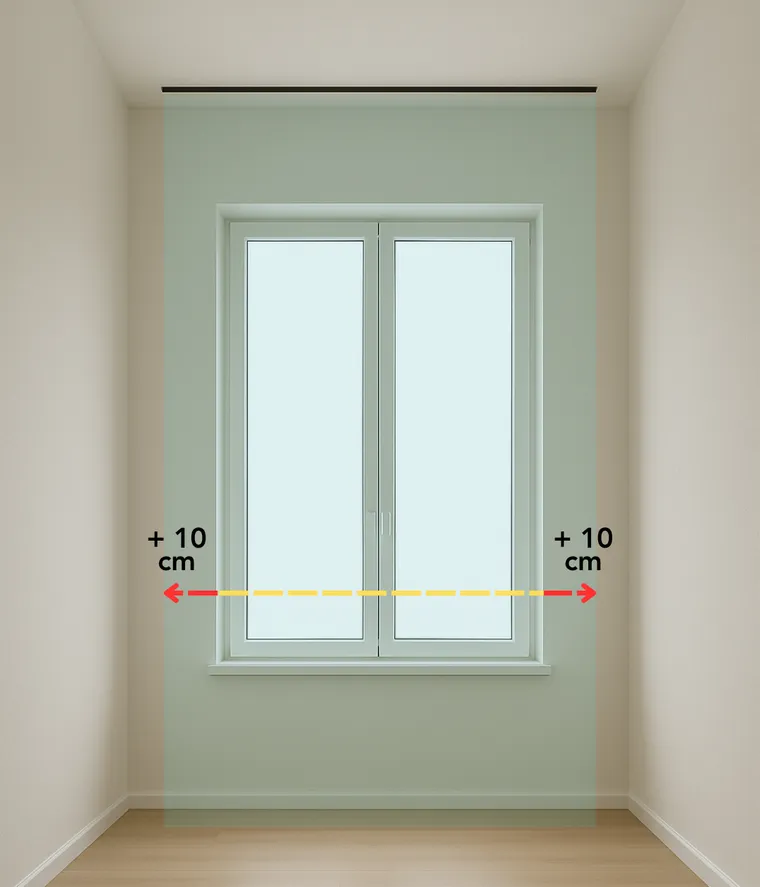 1
How to measure the width
Measure the opening from one side of the frame to the other and add 10 cm per side: this is the measurement to enter in the configurator, i.e. the width of the rod or track. If the rod is already fitted, measure the rod itself. For a glass (sash) curtain, measure just the glass.
Tip: Use a rigid tape measure for greater precision.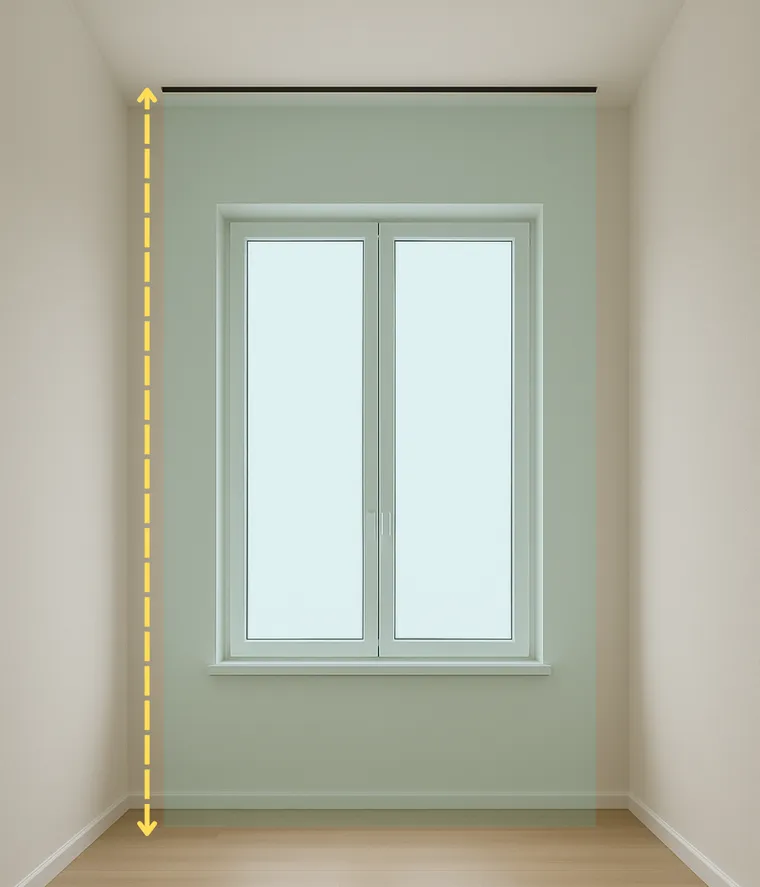 2
Height with a ceiling track
Measure from the track mounting point (ceiling) down to the floor, or to the desired length.
Tip: Consider whether you want the curtain to reach the floor.Rod height: If the curtain hangs from a rod, measure the height starting from the rod and add about 5 cm for the space the rod takes up: in the configurator, enter the total length of the curtain, including these centimetres.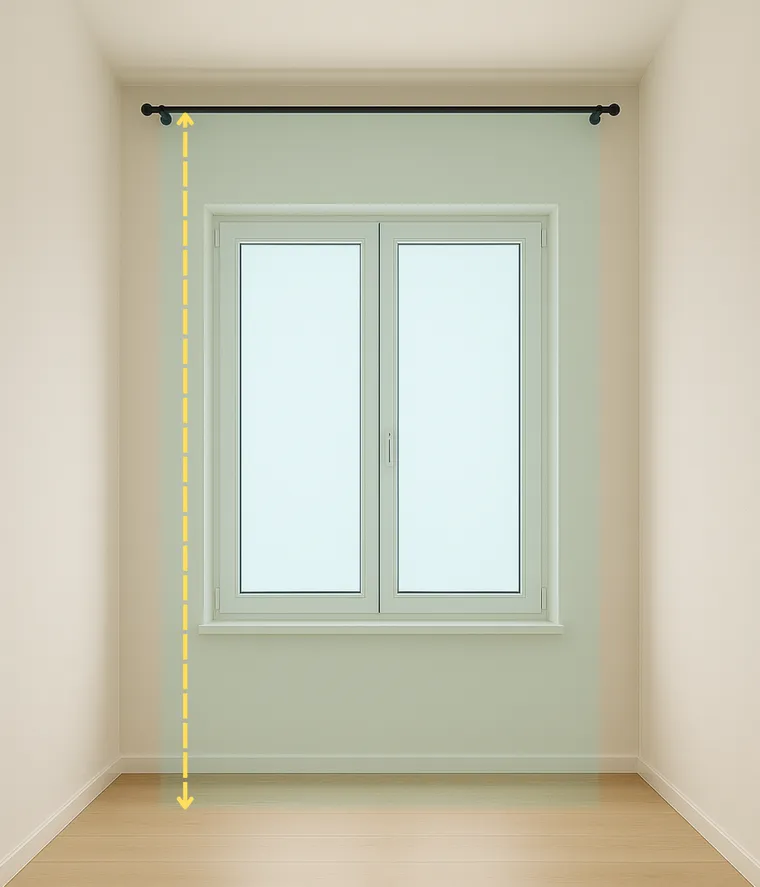 3
Height with a wall track
Measure from the track mounting point on the wall down to the floor, or to the desired length.
Tip: This measurement is essential for correct mounting.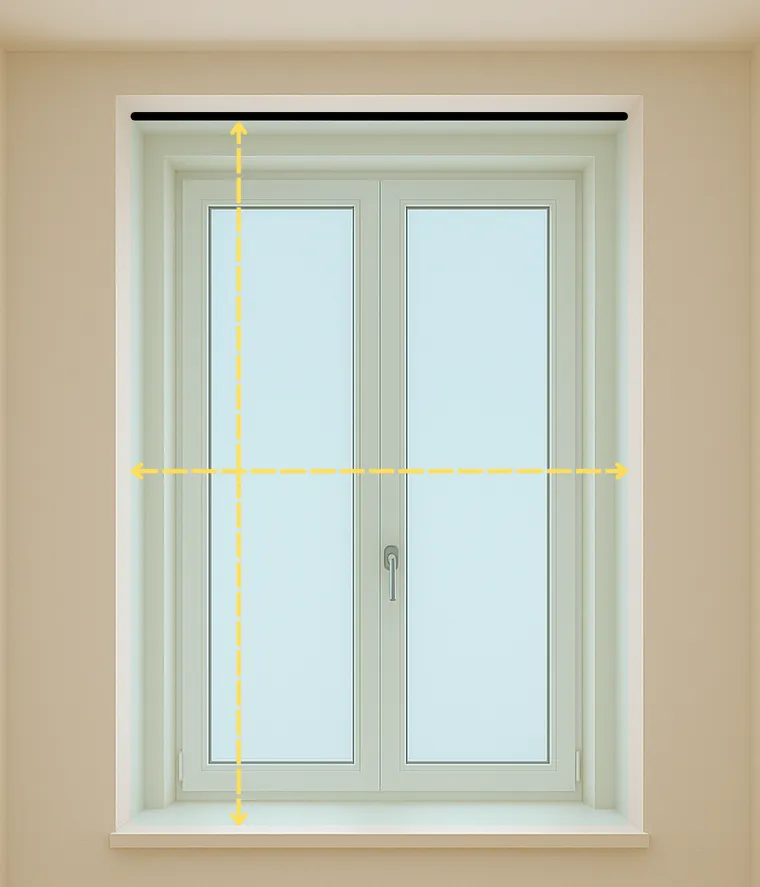 4
Measuring the inside of the recess
Measure the height and width of the recess, as in the image.
Tip: Measure at several points to check for any irregularities.Rod height: If the curtain hangs from a rod, measure the height starting from the rod and add about 5 cm for the space the rod takes up: in the configurator, enter the total length of the curtain, including these centimetres.
Small differences to keep in mind.
The basic measurement is always the same — width and height. Just a few extra tips change depending on how the curtain opens.
Wave or gathered
It needs more fabric than the opening to form the folds. Enter the width of the rod or track (opening + 10 cm per side): the configurator takes care of the extra fabric for the waves.
Roman blind
If you mount it inside the recess, measure the depth too: the blind needs enough room when it lifts.
Sliding panels
Divide the width by the number of panels you want. Perfect for wide glass walls and sliding doors.
Roller blind
Inside the recess, measure the clear internal opening; outside the recess, add coverage at the sides, as with curtains.
Measurements taken? Now for the fun part.
Open the configurator and watch your curtain take shape, or start from the real fabrics in our collection.